Introduction
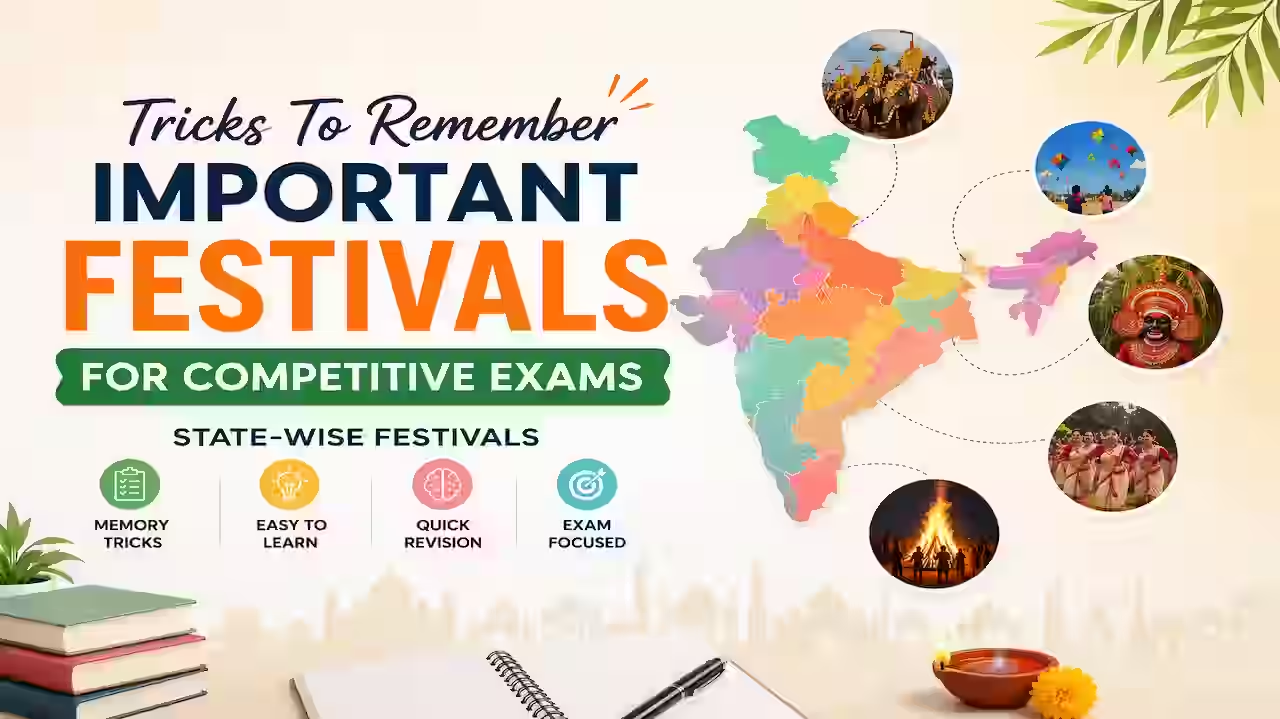
When preparing for competitive examinations such as SSC CGL, UPSC, Railways, Banking, and various State PSCs, aspirants often find it challenging to remember the numerous festivals celebrated across different Indian states. Since questions related to festivals and their associated states frequently appear in General Awareness and Static GK sections, mastering this topic can significantly improve your score. This is why many students search for effective Tricks To Remember Important Festivals For Competitive Exams that can help them recall state-wise festivals quickly and accurately. However, memorizing long lists of festivals and linking each one to the correct state through rote learning often leads to confusion and forgetfulness during exams.
To make this topic easier and more enjoyable, I have developed a set of simple and effective memory tricks focused specifically on connecting important festivals with their respective states. The approach used in this article is highly systematic. First, a Main Trick/Hint is created to help you remember the state. Then, a Sub-Trick/Hint is used to associate the festival with that state through a memorable word, story, or visual connection. This layered method strengthens retention and enables quick recall during examinations, reducing the chances of mixing up similar festivals from different regions.
The primary focus of this article is state-wise festival identification, which is one of the most frequently tested areas in competitive exams. By learning these specially designed Tricks To Remember Important Festivals For Competitive Exams, aspirants can quickly remember which festival belongs to which state without repeatedly revising lengthy lists.
Disclaimer: All the memory tricks, mnemonics, stories, and associations presented in this article have been created by me solely for educational purposes and easy memorization. They are intended to help aspirants recall information efficiently and are not meant to disrespect, misrepresent, or hurt the sentiments of any community, culture, religion, state, or tradition. Any resemblance to real persons, places, or events in the mnemonics is purely coincidental and used only as a memory aid.
Example: Andhra Pradhesh
Main Trick/Hint: Now, the word for Andhra Pradesh is ‘spicy’ or ‘heat’.
1. Makara Sankranti
- Trick: The ‘kara’ in ‘makara’ sounds like ‘karam,’ which means ‘spicy’ or ‘chili’ in English. So you can remember it that way.
Tricks To Remember Important Festivals For Competitive Exams
Andhra Pradesh
Main Trick/Hint: Now, the word for Andhra Pradesh is ‘spicy’ or ‘heat’.

1. Makara Sankranti
- Festival Name: Makara Sankranti
- State/Region associated: Andhra Pradesh (Statewide, heavily celebrated in Coastal Andhra)
- Religion/Community associated: Hindu / Agrarian Community
- Month/Season of celebration: January (Mid-Jan, Maagam month)
- Type of festival: Harvest
- Significance/Purpose: Marks the sun’s transition into Makara Rasi (Capricorn) and serves as a thanksgiving to nature and cattle for a successful harvest.
- Important deity/person associated: Surya (Sun God).
- Special ritual or unique feature: It is a 4-day festival comprising Bhogi (bonfire of old items), Sankranti (main harvest day with intricate Muggulu/Rangoli), Kanuma (cattle worship), and Mukkanuma.
- Famous place where celebrated: Konaseema region (famous for traditional celebrations and fairs)
- Recently in news/current affairs: Frequently highlighted in regional news for the massive economic influx into rural Godavari districts and the regulation of traditional rural sports.
- UNESCO recognition: No
- One-line exam fact: The third day of the AP Sankranti festival, known as Kanuma, is specifically dedicated to cattle worship and honoring agricultural livestock.
- Trick/Hint: The ‘kara’ in ‘makara’ sounds like ‘karam,’ which means ‘spicy’ or ‘chili’ in English. So you can remember it that way.
2. Ugadi
- Festival Name: Ugadi
- State/Region associated: Andhra Pradesh (Statewide)
- Religion/Community associated: Telugu Hindu
- Month/Season of celebration: March–April (Chaitra month)
- Type of festival: Cultural / Religious
- Significance/Purpose: Celebrated as the Telugu New Year based on the lunisolar calendar; marks the beginning of spring and a fresh astronomical cycle.
- Important deity/person associated: Lord Brahma
- Special ritual or unique feature: Consumption of “Ugadi Pachadi”—a special dish containing 6 tastes (sweet, sour, bitter, tangy, spicy, salty) symbolizing the six emotional phases of life. It also involves “Panchanga Sravanam” (listening to the yearly almanac).
- Famous place where celebrated: Statewide
- Recently in news/current affairs: State-sponsored “Panchanga Sravanam” events are highly publicized annually, where the state’s economic and agricultural fortunes for the year are officially read.
- UNESCO recognition: No
- One-line exam fact: Ugadi is celebrated on the first day of the Chaitra month, and its signature dish ‘Ugadi Pachadi’ symbolizes accepting all flavors (emotions) of life with equanimity.
- Trick/Hint: Remember it like this: in this festival, there is an item called Ugadi pickle that has a mix of different tastes.
3. Tirumala Brahmotsavam
- Festival Name: Tirumala Brahmotsavam
- State/Region associated: Rayalaseema (Tirupati)
- Religion/Community associated: Hindu (Sri Vaishnavism)
- Month/Season of celebration: September–October (Ashvini month)
- Type of festival: Religious
- Significance/Purpose: A massive 9-day annual festival signifying cosmic creation; it is believed Lord Brahma himself first conducted this festival as a thanksgiving.
- Important deity/person associated: Lord Venkateswara (Balaji) and Lord Brahma
- Special ritual or unique feature: The Utsava Murti (processional deity) is taken around the temple streets on different ‘Vahanas’ (chariots), with the ‘Garuda Vahana Seva’ being the most prestigious and crowded event.
- Famous place where celebrated: Tirumala Venkateswara Temple, Tirupati
- Recently in news/current affairs: Continually in the news regarding the massive scale of crowd management, digital ticketing rollouts, and the deployment of green initiatives by the TTD (Tirumala Tirupati Devasthanams).
- UNESCO recognition: No
- One-line exam fact: According to temple legends, the Tirumala Brahmotsavam was originally initiated by Lord Brahma as a thanksgiving to Lord Venkateswara.
- Trick/Hint: Remember it like this: in Tirumala Tirupati, there is a lot of heat and strong sunlight. Think of that heat and associate it with something spicy.
4. Atla Tadde
- Festival Name: Atla Tadde
- State/Region associated: Andhra Pradesh (Prominent in Coastal AP)
- Religion/Community associated: Hindu (Married and unmarried women)
- Month/Season of celebration: September–October (3rd night after full moon in Ashvini)
- Type of festival: Cultural / Religious
- Significance/Purpose: Observed by women for the health and long life of their husbands, and by unmarried girls to seek a good husband.
- Important deity/person associated: Goddess Gauri
- Special ritual or unique feature: Women observe a strict daytime fast, apply ‘Gorintaku’ (henna), play traditional games like swinging (Uyyala), and break their fast after viewing the moon by consuming miniature dosas called ‘Atlu’.
- Famous place where celebrated: Statewide
- Recently in news/current affairs: Cultural preservation societies and state tourism boards have recently started organizing traditional Atla Tadde game competitions to revive forgotten rural pastimes.
- UNESCO recognition: No
- One-line exam fact: Atla Tadde is considered the traditional Andhra equivalent of Karwa Chauth, where miniature dosas (Atlu) are offered to Goddess Gauri.
- Trick/Hint: Alta sounds like ‘attulu,’ which means food. If we eat hot and spicy attulu, it tastes very good.
5. Ponna Kaluva Utsavam
- Festival Name: Ponna Kaluva Utsavam
- State/Region associated: Rayalaseema (Tirupati)
- Religion/Community associated: Hindu (Vaishnavite)
- Month/Season of celebration: April–May (Chitra Pournami)
- Type of festival: Religious / Seasonal
- Significance/Purpose: Acts as a symbolic summer retreat for the deities, showcasing the classical linkage between temple rituals and climatic seasons.
- Important deity/person associated: Lord Govindaraja along with Sridevi and Bhudevi
- Special ritual or unique feature: Deities are taken in a procession to a temple water channel (Ponna Kaluva) and cooled with traditional substances like vettiver (Khus) to provide relief from the peak summer heat.
- Famous place where celebrated: Tirupati
- Recently in news/current affairs: Featured in recent APPSC current affairs materials due to its reflection of ancient, eco-friendly temple traditions designed around local geography and peak summer management.
- UNESCO recognition: No
- One-line exam fact: Ponna Kaluva Utsavam is a unique summer ritual in Tirupati where deities are given ceremonial cooling baths at a water mandapam on Chitra Pournami.
- Trick/Hint: The ‘kal’ in ‘kaluva’ sounds like ‘kalindhi,’ which means ‘burned’ in Telugu. Remember it by associating it with heat and burning.
6. Visakha Utsav
- Festival Name: Visakha Utsav
- State/Region associated: Coastal Andhra (Visakhapatnam)
- Religion/Community associated: All Communities (Secular)
- Month/Season of celebration: It is usually held in the winter season, with recent editions in late January.
- Type of festival: Cultural / Tourism
- Significance/Purpose: Promotes regional tourism, local arts, crafts, coastal cuisine, and the rich history of the Visakhapatnam region.
- Important deity/person associated: None
- Special ritual or unique feature: A 4-day extravaganza hosted primarily on the beaches, featuring heritage tours, water sports displays, flower shows, and classical dance performances against the backdrop of the sea.
- Famous place where celebrated: RK Beach and surrounding areas in Visakhapatnam
- Recently in news/current affairs: Heavily promoted by the AP Tourism Development Corporation as part of the strategy to brand Visakhapatnam as a premier global beach tourism destination.
- UNESCO recognition: No
- One-line exam fact: Visakha Utsav is a state-sponsored secular festival aimed at promoting the cultural heritage and tourism potential of the Eastern Ghats and the coastal AP region.
- Trick/Hint: In Andhra Pradesh, there is a lot of heat during the summer. If you go to Araku near Visakhapatnam, you will feel cool because it is a hilly area.
Arunachal Pradesh
Main Trick/Hint: Now, the word for Arunachal Pradesh is ‘move forward’ or ‘go,’ because ‘chal in Arunachal’ means walk or move.
1. Losar
- Festival Name: Losar
- State/Region associated: Arunachal Pradesh (Tawang and West Kameng districts)
- Religion/Community associated: Mahayana Buddhist / Monpa tribe
- Month/Season of celebration: February–March (Based on the Tibetan lunar calendar)
- Type of festival: Religious / Cultural (New Year)
- Significance/Purpose: Celebrated as the Tibetan New Year; marks the warding off of evil spirits and the welcoming of happiness, prosperity, and a good harvest.
- Important deity/person associated: Various Buddhist deities (celebrates the teachings of Buddha)
- Special ritual or unique feature: Consumption of ‘Gutu’ (a special dough ball noodle soup) and the performance of the traditional ‘Aji Lhamu’ mask dance.
- Famous place where celebrated: Tawang Monastery
- Recently in news/current affairs: Frequently highlighted as a major border-tourism draw and a symbol of India’s preservation of Tibetan Buddhist culture near the Line of Actual Control (LAC).
- UNESCO recognition: No
- One-line exam fact: Losar is the 15-day New Year festival of the Monpa tribe, heavily centered around the rituals of the Tawang Monastery.
- Trick/Hint: Remember ‘Losar’ sounds like ‘lose.’ So remember it like this: if you don’t move forward, you will lose.
2. Solung
- Festival Name: Solung
- State/Region associated: Arunachal Pradesh (East Siang and Lower Dibang Valley)
- Religion/Community associated: Indigenous Animist (Donyi-Polo) / Adi tribe
- Month/Season of celebration: September (First week)
- Type of festival: Harvest / Agricultural
- Significance/Purpose: Marks the beginning of the harvest season, seeking protection for crops and a bountiful yield from the gods.
- Important deity/person associated: Kine Nane (Goddess of crops) and Doying Bote (God of wisdom)
- Special ritual or unique feature: The sacrifice of the Mithun (Indian bison) and the performance of the ‘Ponung’ dance by Adi women wearing their traditional ‘Gale’ attire.
- Famous place where celebrated: Pasighat (East Siang district)
- Recently in news/current affairs: Central leaders frequently attend Solung to promote the preservation of indigenous faiths and the economic value of Mithun rearing in the Northeast.
- UNESCO recognition: No
- One-line exam fact: Solung is the most important agricultural festival of the Adi tribe, characterized by Mithun sacrifices and the traditional Ponung dance.
- Trick/Hint: Remember ‘Solung’ sounds like ‘so long.’ So remember it like this: you walked for so long.
3. Mopin
- Festival Name: Mopin
- State/Region associated: Arunachal Pradesh (West Siang and East Siang districts)
- Religion/Community associated: Indigenous Animist (Donyi-Polo) / Galo tribe
- Month/Season of celebration: April (Usually begins around April 5th)
- Type of festival: Agricultural / Harvest
- Significance/Purpose: Celebrated to drive away evil shadows, prevent natural calamities, and invoke blessings for a rich harvest and communal harmony.
- Important deity/person associated: Mopin Ane (Goddess of welfare, wisdom, and abundance)
- Special ritual or unique feature: Smearing of ‘Iti’ (wet rice flour paste) on each other’s faces as a symbol of purity and unity; performance of the ‘Popir’ dance.
- Famous place where celebrated: Aalo (West Siang district)
- Recently in news/current affairs: The “Central Mopin” celebrations in Aalo draw widespread state funding to boost ethno-tourism and preserve the Galo language.
- UNESCO recognition: No
- One-line exam fact: During the Galo tribe’s Mopin festival, revelers smear rice flour on each other’s faces and worship the goddess Mopin Ane for agricultural prosperity.
- Trick/Hint: Remember ‘pin’ in ‘Mopin’ like ‘PIN.’ You need a PIN code to go to or access a place, so remember it like this.
4. Dree
- Festival Name: Dree
- State/Region associated: Arunachal Pradesh (Lower Subansiri district)
- Religion/Community associated: Indigenous Animist (Donyi-Polo) / Apatani tribe
- Month/Season of celebration: July (Main day is July 5th)
- Type of festival: Agricultural / Harvest
- Significance/Purpose: Celebrated to appease the gods to protect paddy crops from pests and famine, ensuring a good harvest.
- Important deity/person associated: Gods Tamu, Metii, Danyi, and Harniang
- Special ritual or unique feature: Distribution of locally brewed rice beer (‘Apong’) and cucumbers to guests. The cucumber symbolizes the sacredness of vegetables and a bountiful harvest.
- Famous place where celebrated: Ziro Valley
- Recently in news/current affairs: Often featured in ecological news due to the Apatani tribe’s highly efficient, sustainable wet-rice and fish co-cultivation methods showcased during the festival.
- UNESCO recognition: The Ziro Valley itself is on the UNESCO World Heritage Tentative List for its unique cultural landscape.
- One-line exam fact: The Dree festival is uniquely associated with the Apatani tribe of the Ziro Valley, celebrated in July to protect crops from pests.
- Trick/Hint: Remember ‘Dree’ as ‘tree.’ So remember it like you walked through a big tree garden.
5. Nyokum
- Festival Name: Nyokum (or Nyokum Yullo)
- State/Region associated: Arunachal Pradesh (Papum Pare, Kurung Kumey, East Kameng)
- Religion/Community associated: Indigenous Animist (Donyi-Polo) / Nyishi tribe
- Month/Season of celebration: February (Main day is February 26th)
- Type of festival: Agricultural / Cultural
- Significance/Purpose: “Nyok” means land and “Kum” means togetherness; it is celebrated to invite the gods of the universe for communal harmony and agricultural prosperity before sowing begins.
- Important deity/person associated: Goddess Nyokum
- Special ritual or unique feature: Priests (Nyubus) chant hymns, and offerings are made in a central structure called ‘Yugang’ made of bamboo, alongside ritualistic Mithun sacrifices.
- Famous place where celebrated: Yazali and Itanagar
- Recently in news/current affairs: The festival is heavily promoted by the state government to unify the Nyishi tribe, the largest ethnic group in Arunachal Pradesh.
- UNESCO recognition: No
- One-line exam fact: Nyokum is the principal pre-sowing festival of the Nyishi tribe, celebrating communal togetherness and prosperity.
- Trick/Hint: ‘Kum’ in ‘Nyokum’ sounds like ‘come.’ The opposite of ‘come’ is ‘go,’ so remember it like that.