Q51. The vibrant ‘Goa Carnival’, featuring colorful floats, street dances, and musical standard parades led by King Momo, was historically introduced to the region by which colonial power?
A) The British
B) The Portuguese
C) The French
D) The Dutch
Answer: B) The Portuguese
Q52. The ‘Shigmo’ festival of Goa is a grand regional celebration characterized by public parades of folk dances like Ghodemodni and Romtamel, corresponding to:
A) The winter fishing harvest launch
B) The spring festival of Holi
C) Monsoon cloud welcoming
D) Deepawali lighting
Answer: B) The spring festival of Holi
Q53. The ‘Bhagoria Festival’ of Madhya Pradesh is a prominent, lively cultural fair involving matching match-making traditions, music, and dance celebrated by which tribal communities?
A) Bhil and Bhilala Tribes
B) Gond and Baiga Tribes
C) Santhal and Oraon Tribes
D) Toda and Chenchu Tribes
Answer: A) Bhil and Bhilala Tribes
Q54. The ‘Khajuraho Dance Festival’ of Madhya Pradesh presents major Indian classical dance forms every winter against the architectural backdrop of temples built by which dynasty?
A) Paramara Dynasty
B) Chandela Dynasty
C) Kalachuri Dynasty
D) Bundela Dynasty
Answer: B) Chandela Dynasty
Q55. The ‘Flamingo Festival’ is organized annually by the state tourism board to promote eco-tourism around which prominent water body in Andhra Pradesh?
A) Kolleru Lake
B) Pulicat Lake and Nelapattu Bird Sanctuary
C) Hussain Sagar
D) Nagarjuna Sagar
Answer: B) Pulicat Lake and Nelapattu Bird Sanctuary
Q56. The annual ‘Srivari Brahmotsavam’ festival, a spectacular 9-day event featuring majestic vehicular processions (Vahanam), is celebrated at which temple in Andhra Pradesh?
A) Mallikarjuna Temple, Srisailam
B) Venkateswara Temple, Tirumala (Tirupati)
C) Kanaka Durga Temple, Vijayawada
D) Simhachalam Temple
Answer: B) Venkateswara Temple, Tirumala (Tirupati)
Q57. The floral festival of ‘Bathukamma’, where women arrange seasonal flowers in beautiful concentric layers to form towers worshiping Goddess Maha Gauri, belongs to:
A) Andhra Pradesh
B) Telangana
C) Karnataka
D) Tamil Nadu
Answer: B) Telangana
Q58. The ‘Bonalu’ festival of Telangana involves offering rice cooked with milk and jaggery in brass/earthen pots to which deity across Hyderabad and Secunderabad?
A) Goddess Lakshmi
B) Goddess Mahakali
C) Goddess Saraswati
D) Goddess Bhuvaneshwari
Answer: B) Goddess Mahakali
Q59. The historic ‘Mysore Dasara’ of Karnataka, celebrated with a grand royal parade (Jumboo Savari) featuring a golden howdah on an elephant, was initiated under which historical empire?
A) Kadamba Empire
B) Vijayanagara Empire (later continued by the Wodeyars)
C) Rashtrakuta Empire
D) Chalukya Empire
Answer: B) Vijayanagara Empire (later continued by the Wodeyars)
Q60. ‘Kambala’ is a traditional annual festival featuring thrilling mud-track buffalo races organized across which geographical region of Karnataka?
A) Bayaluseeme Region
B) Coastal Districts (Dakshina Kannada and Udupi)
C) Malnad High Altitude Belt
D) Deccan Plateau Border
Answer: B) Coastal Districts (Dakshina Kannada and Udupi)
Q61. The majestic ‘Mahamastakabhisheka’ festival of Shravanabelagola, Karnataka, involves the ritual anointing of the giant monolithic statue of Lord Bahubali every:
A) 5 years
B) 12 years
C) 15 years
D) 20 years
Answer: B) 12 years
Q62. The ‘Ugadi’ festival celebrated in Andhra Pradesh, Telangana, and Karnataka marks the traditional New Year. Which item is structurally central to it, symbolizing the six tastes of life?
A) Ugadi Pachadi
B) Puran Poli
C) Payasam
D) Mysore Pak
Answer: A) Ugadi Pachadi
Q63. The classic ‘Onam’ festival of Kerala is celebrated to welcome the annual spiritual return of which mythological ruler?
A) King Marthanda Varma
B) King Mahabali
C) King Raja Raja Chola
D) Sage Parashurama
Answer: B) King Mahabali
Q64. The ‘Vallam Kali’ (Snake Boat Race), featured during the Onam festival on the Pamba River, competes for which prestigious trophy?
A) Viceroy’s Cup
B) Nehru Trophy
C) King’s Golden Anchor
D) Willingdon Trophy
Answer: B) Nehru Trophy
Q65. The spectacular ‘Thrissur Pooram’ festival of Kerala, celebrated at the Vadakkunnathan Temple, is world-famous for its competitive performance of:
A) Snake boat maneuvering
B) Kudamattom (rapid, rhythmic changing of colorful parasols atop decorated elephants) and Elanjithara Melam percussion
C) Kathakali dance battles
D) High-altitude flame throwing
Answer: B) Kudamattom (rapid, rhythmic changing of colorful parasols atop decorated elephants) and Elanjithara Melam percussion
Q66. The annual ‘Makaravilakku’ festival, which features the appearance of a sacred celestial light on the hills of Sabarimala, takes place on which specific day?
A) Kartik Purnima
B) Makar Sankranti
C) Maha Shivaratri
D) Maha Navami
Answer: B) Makar Sankranti
Q67. The harvest festival of ‘Pongal’ in Tamil Nadu spans four consecutive days. What is the correct chronological order of these four days?
A) Mattu Pongal, Bhogi Pongal, Surya Pongal, Kaanum Pongal
B) Bhogi Pongal, Surya Pongal, Mattu Pongal, Kaanum Pongal
C) Surya Pongal, Bhogi Pongal, Kaanum Pongal, Mattu Pongal
D) Kaanum Pongal, Mattu Pongal, Surya Pongal, Bhogi Pongal
Answer: B) Bhogi Pongal, Surya Pongal, Mattu Pongal, Kaanum Pongal
Q68. The controversial yet deeply historical traditional sport of ‘Jallikattu’ (taming the bull) is organized as a core cultural component of which day of Pongal?
A) Bhogi Pongal
B) Mattu Pongal
C) Surya Pongal
D) Kaanum Pongal
Answer: B) Mattu Pongal
Q69. The ‘Natyanjali Dance Festival’, which brings together classical dancers from across India to perform as a tribute to Lord Nataraja, is held annually at which temple in Tamil Nadu?
A) Meenakshi Temple, Madurai
B) Thillai Nataraja Temple, Chidambaram
C) Brihadeeswarar Temple, Thanjavur
D) Shore Temple, Mahabalipuram
Answer: B) Thillai Nataraja Temple, Chidambaram
Q70. The legendary ‘Kumbh Mela’ is rotated cyclically across four sacred river-bank locations in India. Which is the correct set of these four cities?
A) Prayagraj, Haridwar, Ujjain, and Nashik
B) Varanasi, Haridwar, Patna, and Gaya
C) Ayodhya, Prayagraj, Mathura, and Puri
D) Nashik, Ujjain, Dwarka, and Rameshwaram
Answer: A) Prayagraj, Haridwar, Ujjain, and Nashik
Q71. Which community celebrates ‘Navroz’ or ‘Nowruz’ as their traditional New Year festival, which is also inscribed on the UNESCO Intangible Cultural Heritage List?
A) Buddhist Community
B) Parsi Community
C) Jain Community
D) Jewish Community
Answer: B) Parsi Community
Q72. The island cultural event known as the ‘Island Tourism Festival’ is organized annually to boost heritage awareness in which Union Territory?
A) Lakshadweep
B) Andaman and Nicobar Islands
C) Puducherry
D) Daman and Diu
Answer: B) Andaman and Nicobar Islands
Q73. The beachside ‘Tarikart Festival’ or local ‘Nariyal Poornima’ festival, celebrating the end of the monsoon phase for fishermen, is highly prominent in:
A) Ladakh
B) Dadra and Nagar Haveli and Daman and Diu
C) Chandigarh
D) Jammu & Kashmir
Answer: B) Dadra and Nagar Haveli and Daman and Diu
Q74. The historic ‘Galdan Namchot’ festival is celebrated with the illumination of residential and monastic buildings to mark the Buddhahood of Tsongkhapa in:
A) Sikkim
B) Ladakh
C) Arunachal Pradesh
D) Himachal Pradesh
Answer: B) Ladakh
Q75. The ‘Paryushan Parva’ is the most significant annual spiritual purification and fasting period celebrated by the:
A) Sikh Community
B) Jain Community
C) Buddhist Community
D) Sindhi Community
Answer: B) Jain Community
Here are another 5 high-yield MCQs focused on state cultural festivals and important traditional fairs for competitive exams:
Q76. The ‘Kavadi Aattam’ ritual, which involves carrying highly decorated wooden or bamboo arches adorned with peacock feathers, is a core cultural feature of festivals dedicated to which deity in Tamil Nadu?
A) Lord Shiva
B) Lord Murugan (Kartikeya)
C) Lord Vishnu
D) Lord Ganesha
Answer: B) Lord Murugan (Kartikeya)
Q77. The historic ‘Ganga Sagar Mela’, recognized as the second-largest human congregation in India after the Kumbh Mela, takes place annually during Makar Sankranti at the confluence of the Hooghly River and the Bay of Bengal in which state?
A) Odisha
B) West Bengal
C) Bihar
D) Jharkhand
Answer: B) West Bengal
Q78. The unique ‘Lai Haraoba’ festival, celebrated to please the traditional forest deities (Umang Lai) through ritualistic dance and enactment of creation myths, belongs to which community?
A) Meitei community of Manipur
B) Mishmi tribe of Arunachal Pradesh
C) Khasi tribe of Meghalaya
D) Mizo tribe of Mizoram
Answer: A) Meitei community of Manipur
Q79. The ‘Tarnetar Fair’ of Gujarat, famous for its grand folk dances, match-making traditions, and beautifully embroidered umbrellas, is culturally linked to the swayamvara folklore of which epic character?
A) Sita
B) Draupadi
C) Rukmini
D) Radha
Answer: B) Draupadi
Q80. The ‘Nishagandhi Dance Festival’, an annual open-air celebration showcasing elite classical dance performers from all over India, is organized by the state tourism department in which southern capital?
A) Bengaluru, Karnataka
B) Thiruvananthapuram, Kerala
C) Chennai, Tamil Nadu
D) Hyderabad, Telangana
Answer: B) Thiruvananthapuram, Kerala
Q81. The traditional harvest festival of ‘Vishu’ marks the astronomical New Year in which coastal state, featuring the setting up of the lucky Vishukkani mirror arrangement?
A) Tamil Nadu
B) Kerala
C) Goa
D) Odisha
Answer: B) Kerala
Q82. The ‘Puthandu’ festival is celebrated as the traditional New Year’s Day by the people of which state?
A) Andhra Pradesh
B) Tamil Nadu
C) Karnataka
D) Kerala
Answer: B) Tamil Nadu
Q83. The unique ‘Poila Boishakh’ festival marks the first day of the initial harvest calendar month in which region?
A) Assam
B) West Bengal
C) Odisha
D) Bihar
Answer: B) West Bengal
Q84. The cultural festival of ‘Cheti Chand’ is celebrated as the traditional New Year’s Day by which specific community to honor Varuna Dev (Jhulelal)?
A) Parsi Community
B) Sindhi Community
C) Marwari Community
D) Sikh Community
Answer: B) Sindhi Community
Q85. The agrarian festival ‘Sajibu Cheiraoba’ is celebrated as the traditional lunar New Year by the Meitei community in:
A) Mizoram
B) Manipur
C) Nagaland
D) Tripura
Answer: B) Manipur
Q86. The ‘Gudi Padwa’ festival, featuring the raising of a bright silk cloth bound with neem leaves and an inverted silver pot on a stick, marks the New Year in:
A) Gujarat
B) Maharashtra
C) Goa
D) Madhya Pradesh
Answer: B) Maharashtra
Q87. The ‘Baisakhi’ festival, celebrated with energy across Punjab and Haryana, marks the solar New Year and specifically commemorates which major historical milestone of 1699?
A) The construction of the Golden Temple
B) The establishment of the Khalsa Panth by Guru Gobind Singh
C) The signing of the Treaty of Amritsar
D) The birth of Guru Nanak Dev
Answer: B) The establishment of the Khalsa Panth by Guru Gobind Singh
Q88. The ‘Pana Sankranti’ (also called Maha Vishuva Sankranti) marks the traditional New Year day in which eastern coastal state, featuring the distribution of a sweet basil drink?
A) West Bengal
B) Odisha
C) Andhra Pradesh
D) Tamil Nadu
Answer: B) Odisha
Q89. The ‘Bestu Varas’ festival is celebrated as the traditional New Year’s Day on the day immediately following Deepawali in:
A) Rajasthan
B) Gujarat
C) Madhya Pradesh
D) Maharashtra
Answer: B) Gujarat
Q90. The ‘Chaitti’ and ‘Basoa’ festivals are celebrated to mark the harvest season and regional New Year transitions across which mountain state?
A) Sikkim
B) Himachal Pradesh
C) Uttarakhand
D) Arunachal Pradesh
Answer: B) Himachal Pradesh
Q91. With reference to the iconic ‘Lathmar Holi’ of Uttar Pradesh, women from which specific village traditionally visit Nandgaon to beat men with wooden staffs?
A) Vrindavan
B) Barsana
C) Mathura
D) Gokul
Answer: B) Barsana
Q92. The annual ‘Sangken’ festival, characterized by splashing water on Buddha statues, is shared culturally between India and which neighboring country’s traditional calendar?
A) Sri Lanka
B) Myanmar (Thingyan Festival connection)
C) Nepal
D) Bhutan
Answer: B) Myanmar (Thingyan Festival connection)
Q93. The ancient ‘Bateshwar Fair’ of Agra district, Uttar Pradesh, is contextually organized along the banks of the Yamuna River adjacent to a spectacular line of how many structural Shiva temples?
A) 51 Temples
B) 101 Temples
C) 108 Temples
D) 12 Temples
Answer: B) 101 Temples
Q94. The ‘Anthuriun Festival’ is organized annually by the tourism department to showcase floral wealth, indigenous dances, and bamboo crafts in:
A) Nagaland
B) Mizoram
C) Meghalaya
D) Arunachal Pradesh
Answer: B) Mizoram
Q95. The world-record setting ‘Deepotsav’ festival, which sees millions of traditional oil lamps lit simultaneously along the Saryu River ghats, takes place in:
A) Varanasi
B) Ayodhya
C) Prayagraj
D) Mathura
Answer: B) Ayodhya
Q96. The ‘Dev Deepawali’ festival, celebrated 15 days after Diwali on Kartik Purnima, results in the complete illumination of all 84 grand river ghats of:
A) Haridwar
B) Varanasi
C) Patna
D) Prayagraj
Answer: B) Varanasi
Q97. The traditional ‘Karaga’ festival, one of the oldest heritage celebrations in Bengaluru, Karnataka, is dedicated to the worship of which epic figure?
A) Goddess Sita
B) Draupadi (worshiped as an incarnation of Adishakti)
C) Goddess Radha
D) Kunti
Answer: B) Draupadi (worshiped as an incarnation of Adishakti)
Q98. The ‘Kharchi Puja’ of Tripura requires the chief royal priest (Chantai) to perform rituals for the 14 deities over a week inside the historic complex of:
A) Unakoti
B) Old Agartala (Puran Agartala)
C) Neermahal
D) Udaipur
Answer: B) Old Agartala (Puran Agartala)
Q99. The high-altitude ‘Losar’ celebrations across Arunachal Pradesh are managed primarily by which major Buddhist Monpa-populated district?
A) Changlang
B) Tawang
C) Tirap
D) Longding
Answer: B) Tawang
Q100. The magnificent ‘Moatsu Mong’ festival concludes with the performance of the traditional ‘Sangpangtu’ dance, where a massive community bonfire is lit by the villagers in:
A) Mizoram
B) Nagaland
C) Meghalaya
D) Assam
Answer: B) Nagaland
Conclusion
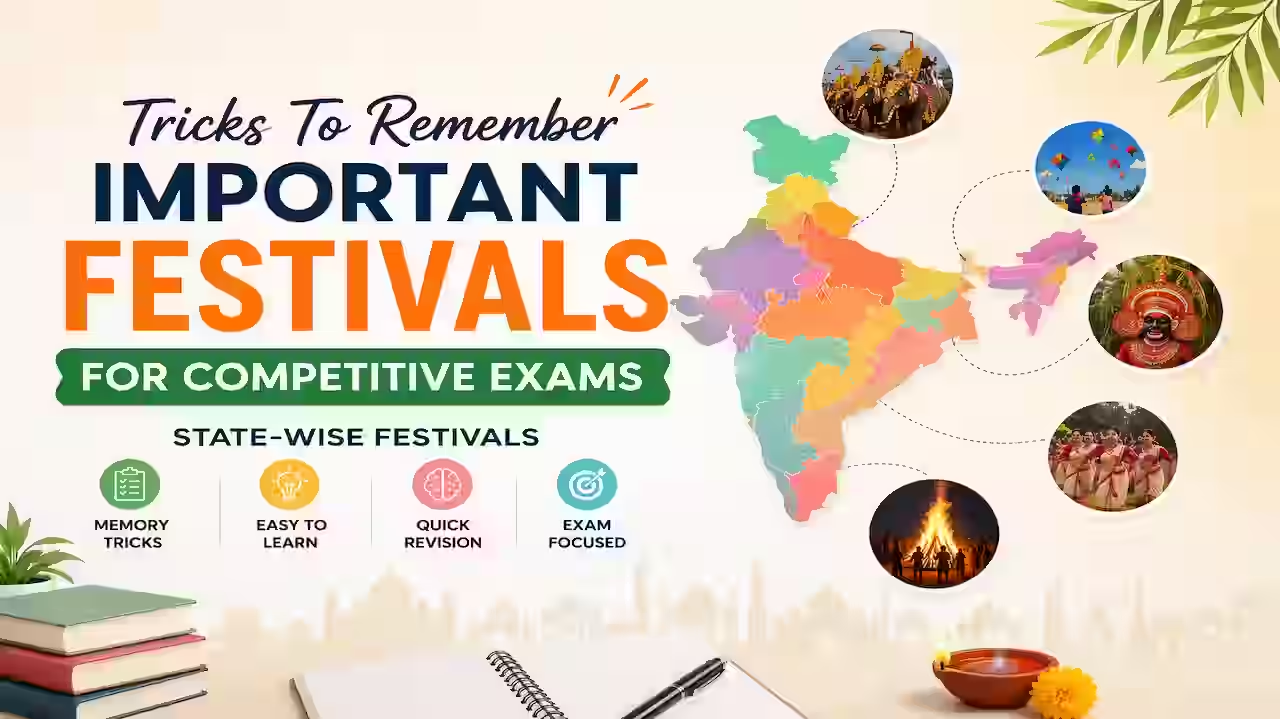
Mastering state-wise festivals for competitive exams does not have to depend on endless rote memorization. By using these Tricks To Remember Important Festivals For Competitive Exams, you can transform long and confusing lists of festivals into simple mental connections that are easy to recall during the exam. The key to success is not just reading these tricks once but revising them regularly. Spend a few minutes each day reviewing the festival-state associations, and you will gradually develop faster recall and greater confidence when solving Static GK questions.
While the mnemonics and memory techniques shared in this article are designed to make learning easier, the most effective strategy is to personalize them further. As you attempt mock tests and practice sets, try creating your own stories, hints, or associations based on familiar people, places, movies, or daily experiences. Personal connections make information much more memorable and significantly reduce the chances of forgetting it under exam pressure. Stay consistent with your revision, keep strengthening these associations, and these Tricks To Remember Important Festivals For Competitive Exams will help you answer festival-related questions quickly and accurately in your upcoming exams.
Frequently Asked Questions (FAQs)
Q1. Why are festivals and their states important for competitive exams?
A: Festivals and their associated states are frequently asked in SSC, UPSC, Railways, Banking, and State PSC exams as part of Static GK and General Awareness sections.
Q2. What are the best Tricks To Remember Important Festivals For Competitive Exams?
A: The best approach is to use mnemonics, memory stories, and visual associations that connect each festival with its respective state.
Q3. How often should I revise festival-state tricks?
A: A quick 5–10 minute revision daily is usually enough to strengthen recall and improve retention before exams.
Q4. Can I create my own memory tricks for festivals?
A: Yes. Personalized mnemonics based on familiar people, movies, places, or experiences are often more effective than generic tricks.
Q5. Which exams commonly ask questions about important festivals and states?
A: Questions on festivals and states are commonly seen in SSC CGL, CHSL, UPSC, Railways, Banking exams, and various State PSC examinations.