Introduction
In late August 2026 a piece of road near IFFCO Chowk in Gurugram simply dropped. Commuters saw a pit. News called it a sinkhole. A few days later a hole opened on the Ganga Expressway after rain. In Dhanbad, people have been living with ground that sinks over old coal workings. Same word. Not always the same earth.
That is how I now start this topic. The headline is dynamic. The geography is static. A true sinkhole, in the textbook sense, is a closed hollow made when rock or soil falls into a space underground. In limestone country that space is carved by water. In a city it may be a leaking sewer washing sand away. In a coalfield it may be an old mine roof giving up.
If you write only “ground caved in,” you have the news. If you can say why the ground had nothing left to sit on, you have the marks.
What a sinkhole is
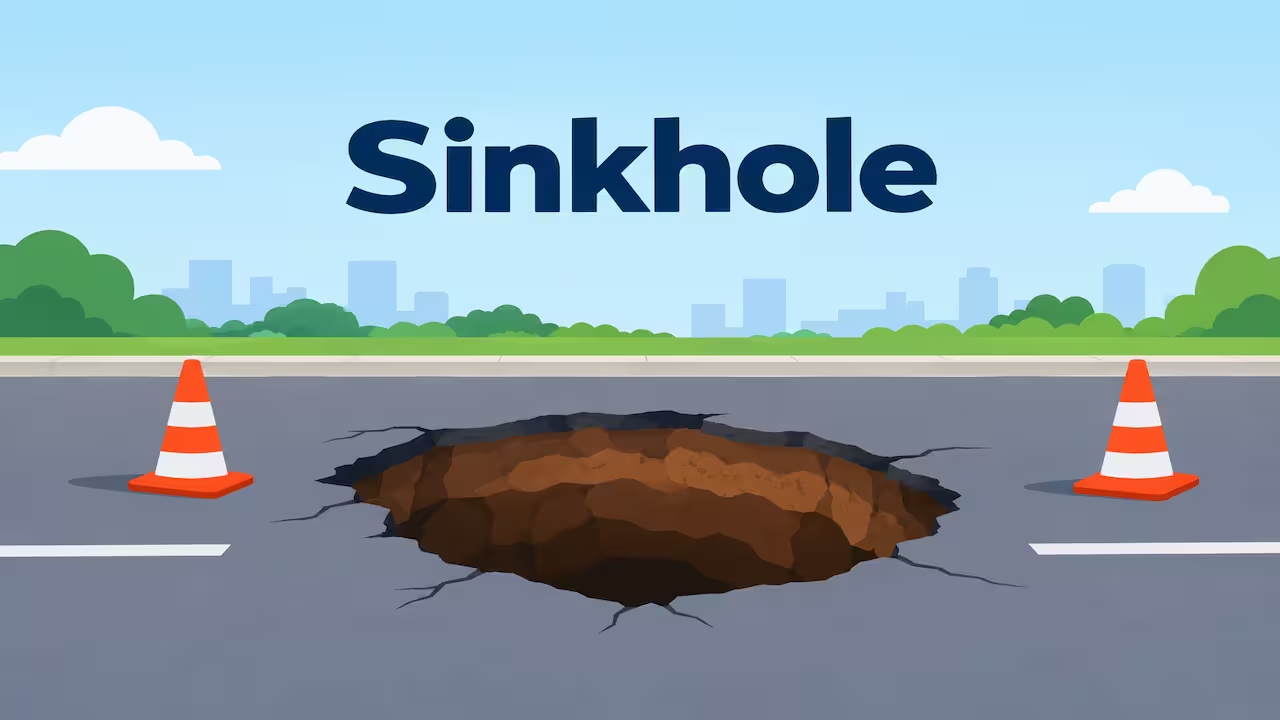
Imagine a hidden room under the floor. For years the floor looks fine. Then the ceiling of that room becomes too thin. One night, or after a heavy rain, the floor falls in. The hole that remains is a sinkhole.
Geographers often use the word doline for the natural bowl in karst land. Engineers and newspapers say sinkhole for almost any sudden pit. In the hall, use both. Say: sinkhole / doline is a depression formed by collapse or by slow dissolving of the surface into underground voids.
It is not a well that someone dug. It is not a bomb crater. It is the land eating itself from below.
Why it is in the news this season
Urban India keeps giving pictures.
Near IFFCO Chowk, officials pointed to a sewer line under the service road. Leakage loosened the soil. The crust of the road had no support. That is a man-made cousin of a sinkhole, not a Meghalaya cave collapsing.
On the Ganga Expressway, rain and weak packing under the tar were blamed for a deep cave-in. Again: water plus loose fill, not a vanished limestone chamber.
Dhanbad’s belt is older and sadder. Underground fires and old coal voids make the surface sag. Houses crack. Pits open in monsoon. That is subsidence, and some pits look like sinkholes.
Keep the honesty in the answer. Many “city sinkholes” are piping and washout under roads. The chemistry chapter still belongs to limestone.
The natural engine: karst
Rainwater picks up carbon dioxide from air and soil and becomes a weak acid. That water loves limestone, dolomite and gypsum. It seeps into joints. It widens them. Caves grow. The roof of a cave is only rock until it is not.
This landscape is karst. Named after a region in Slovenia / the Dinaric hills. Features travel together:
- sinkholes / dolines
- disappearing streams
- caves and stalactites
- springs where the water comes back
- uvalas (joined dolines)
- poljes (wide flat-floored basins)
If a question says “features of karst topography,” sinkhole is the first child of that family.
In India, think of parts of the Meghalaya plateau, limestone belts in the Himalaya, and pockets in the Andaman and other carbonate rocks. Florida in the United States is the world classroom: warm, wet, limestone under a thin cover. Houses and cars have gone in. Guatemala City’s deep urban shafts are the photograph everyone remembers.
The Dead Sea shores add another rock: salt. As the lake level falls, fresh water meets salt beds, dissolves them, and the ground opens in hundreds of holes. That example is gold for “human change speeds up a natural process.”
Types you should not mix
Books cut sinkholes by how they fail.
Solution / dissolution sinkhole
The rock itself is eaten at the surface along cracks. A gentle bowl grows over a long time. Often stable. Good for farmers in some poljes. Not the midnight disaster.
Cover-subsidence sinkhole
A sandy or loose cover slowly trickles into small openings in the rock below. The surface sags little by little. Cracks in walls first. Then a shallow dish.
Cover-collapse sinkhole
The scary one on television. Clay or soil bridges a hidden cavity, then the bridge snaps. A steep-walled hole appears in hours or minutes. Florida’s sudden pits are often this type.
Bedrock-collapse sinkhole
The limestone roof of a real cave falls. Rarer in a human lifetime. Walls can be cliff-like. China’s giant tiankengs and some Mexican sótanos belong to the extreme end of collapse.
Suffosion
Fine grains are washed down into fissures, leaving the surface to settle. Related to cover-subsidence.
Then the cousins that steal the name in cities:
Piping / sewer washout
Water from a broken pipe carries soil away. Road falls in. IFFCO Chowk type.
Mining collapse
Old galleries, coal fires, salt mines. Dhanbad type. Also parts of Raniganj and Jharia in the same story of fire and sag.
Groundwater emptying
Pump a city aquifer hard, and the sediment packs tighter. Land sinks over a wide area — Delhi, Mexico City, parts of Jakarta. That is regional subsidence, not one circular pit, but the same family of “support removed below.”
If the paper says sinkhole, start with karst. If it shows a city road, add the human pipe.
How a collapse is triggered
The cavity can sit for years. What finishes the roof?
Heavy rain after a dry spell. Floodwater finding a new path. A leaking main. A drop in the water table so the cave loses the buoyancy that was helping hold the roof. Vibration from traffic or blasting. Extra weight of a new building. In monsoon India, rain is the usual last straw.
That is why the same colony can look fine in April and open a mouth in August.
Landforms around the hole
A young collapse has raw sides and a rubble floor. An old doline has grass, soil, maybe a pond. If the hole meets the water table, you get a sinkhole lake. Florida is full of them. If the sea floods a collapsed cave, divers talk of a blue hole.
Join two dolines and you are on the way to an uvala. Widen the floor with soil and you approach a polje — a field in a stone basin, common in the Dinaric karst.
Underground, the same water that made the hole is building a cave. So sinkhole questions and cave questions are twins.
Examples for the answer sheet
Meghalaya
Rain plus limestone. Caves, swallow-holes, disappearing rivers. India’s best natural karst set.
Himalayan limestone belts
Solution features in patches. Not Florida-dense, but enough for “India also has karst.”
Florida, USA
Cover-collapse country. The example when you need sudden urban-rural pits on limestone.
Guatemala City
Deep, almost vertical urban shafts linked to plumbing and weak volcanic fill over cavities. The photo example.
Dead Sea, Israel–Jordan
Salt karst after the lake shrank. Human water use in the story.
Xiaozhai Tiankeng, China
Giant collapse doline. Use only if the question wants “largest / extreme.”
Gurugram / Ganga Expressway, 2026
Dynamic hook. Say clearly: reported as sinkholes; cause tied to drains, rain and weak subsurface, not a new Deccan cave.
Dhanbad–Jharia
Mining and fire. Subsidence and pits. Link to resource geography and disaster management.
Mammoth Cave region, Kentucky
Sinkholes feed the cave river — and can also feed pollution straight into the aquifer. Environment paper loves that.
Why the hole is a hazard
People fall in. Cars fall in. A house tilts and then the kitchen is gone. Sewage and pesticides run straight into drinking-water caves because karst does not filter like a sand bed. Rescue in a narrow urban pit is slow. In a coal belt the ground can open under a sleeping room.
Prevention is dull and useful: map the limestone, watch the water table, fix leaks, cap abandoned wells and mines, do not dump waste into a doline, and do not pretend a filled pit is virgin rock.

Borewells left open are a separate Indian tragedy. They are not karst sinkholes. Still mention them in disaster answers under “uncovered cavities.”
Sinkhole, subsidence, landslide — do not swap the words
Sinkhole — local collapse into a void, often round.
Subsidence — wider, slower sinking of the surface.
Landslide — a slope failing sideways, not a floor falling into a room.
GLOF — a glacial lake bursting; different chapter, though both make sudden holes in the news cycle.
Examiners cut marks when Dhanbad fire-sag is called a “limestone doline.”
How I remember
Three sentences.
Water eats lime. Roof gets thin. Rain finishes the job.
Then three places:
- Nature: Meghalaya / Florida
- City pipe: Gurugram 2026
- Mine: Dhanbad
And one contrast:
Deccan is hard basalt. It does not dissolve like limestone. Do not look for Florida pits on the whole lava plateau.
If I need types in five seconds: solution slow, cover sag, cover snap.
How to write it in the exam
2 marks: A sinkhole is a depression formed when the surface collapses into an underground cavity, common in limestone karst; also used for sudden urban cave-ins after soil is washed out.
5 marks: Define. Name solution, cover-subsidence, cover-collapse. Give Florida or Meghalaya. Add one human trigger — rain, leak, or pumping.
Disaster / GS answer: Start with IFFCO Chowk or Dhanbad. Separate karst from sewer and mine. Talk aquifer pollution. End with mapping and repair of underground utilities.
Conclusion
A sinkhole looks like a surprise. Underneath, it is usually old work — water, rock, or a forgotten tunnel — waiting for one wet week.
This year’s road pits in Gurugram and on a new expressway should send you back to the karst page, not replace it. The textbook hole is a doline in soluble rock. The newspaper hole is often a city that did not look after what it buried.
I now read both with the same question: what was holding the floor, and who took it away? If you can answer that, the topic is done.
FAQs
Q1. What is a sinkhole?
A: It is a hole or bowl formed when ground collapses or settles into a cavity below. In limestone areas this is a natural karst doline. In cities it may follow a leaking pipe or washed-out soil.
Q2. How is a sinkhole formed in karst land?
A: Slightly acidic rainwater dissolves limestone along cracks, making caves. When the roof or the soil cover can no longer hold, the surface drops and a sinkhole appears.
Q3. Are the 2026 Gurugram and expressway pits true karst sinkholes?
A: Reports pointed to sewer leakage, rain and weak filling under the road. They behaved like sinkholes on the surface, but the cause is human infrastructure, not a new limestone cave.
Q4. Name three types of sinkhole.
A: Solution sinkhole (slow dissolving of the rock surface), cover-subsidence (slow sag of the soil cover), and cover-collapse (sudden snap of the cover into a hidden void).
Q5. Give useful examples for exams.
A: Natural: Meghalaya karst, Florida, Dead Sea salt sinkholes. Human-linked: urban washouts such as Gurugram 2026, and mining subsidence in the Dhanbad coal belt.